
System identification
The inspection determines whether the door uses torsion springs, extension springs, or another counterbalance setup. The spring type affects the parts and service procedure.
Serving Okeechobee, Florida & surrounding areas
Spring repair service in Okeechobee
Restore balanced door movement with a careful inspection, correctly matched replacement springs, and a complete operating check.
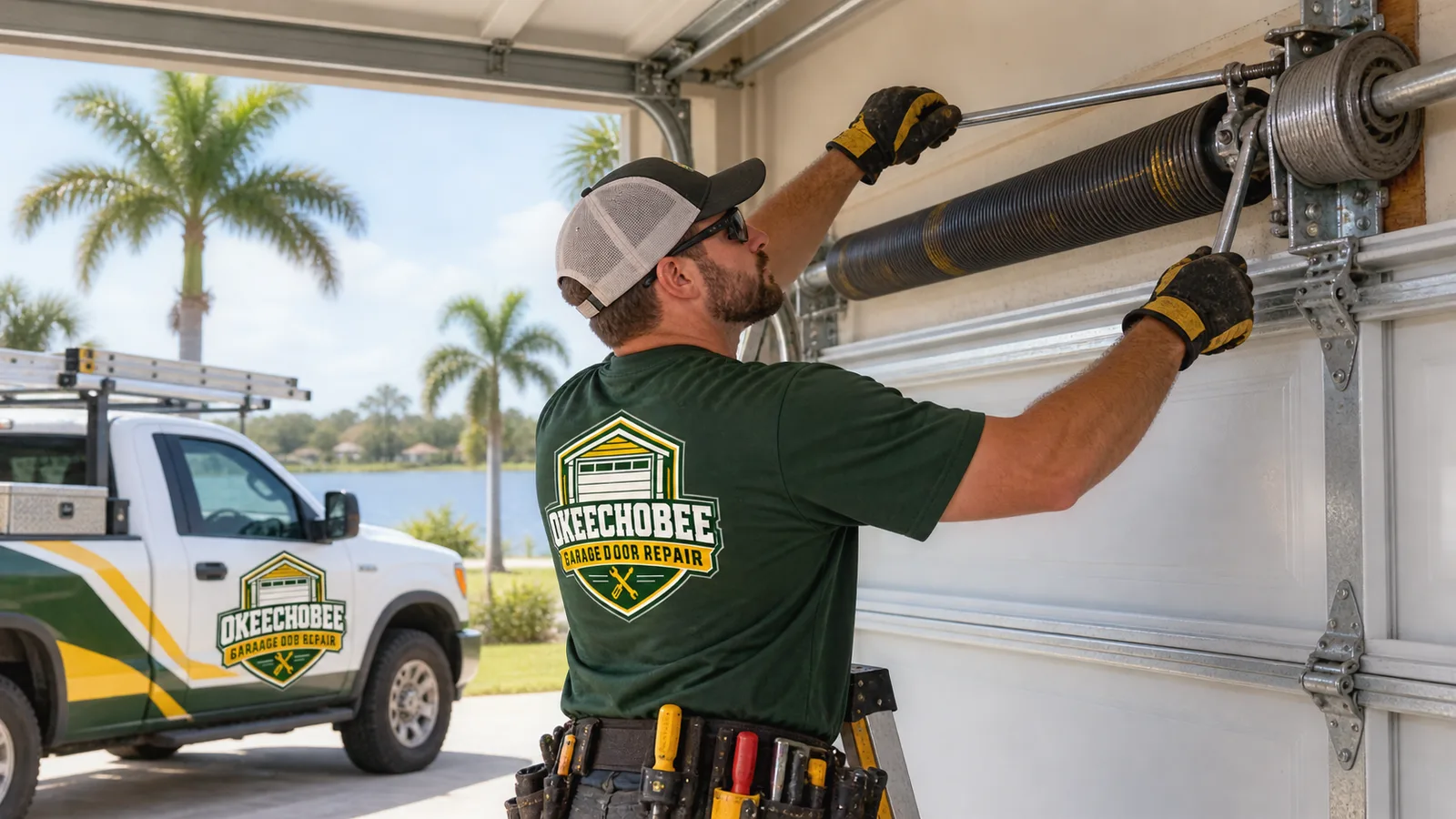
A visibly broken spring, displaced cable, or crooked door should stay put until the complete counterbalance system can be inspected.
Balanced movement starts here
A broken spring can leave a garage door too heavy to lift, crooked in the opening, or unable to move at all. Okeechobee Garage Door Repair inspects the spring system, identifies the cause of the failure, and determines whether adjustment or replacement is appropriate. The goal is balanced movement and safer operation, not simply getting the opener to pull harder.
Springs counterbalance the weight of the door. When one breaks or loses tension, the opener may strain, cables can lose proper tension, and the door may move unevenly. Disconnecting the opener does not make a damaged spring system safe to handle. Avoid lifting the door by hand, loosening set screws, touching winding cones, or cutting cables under tension.
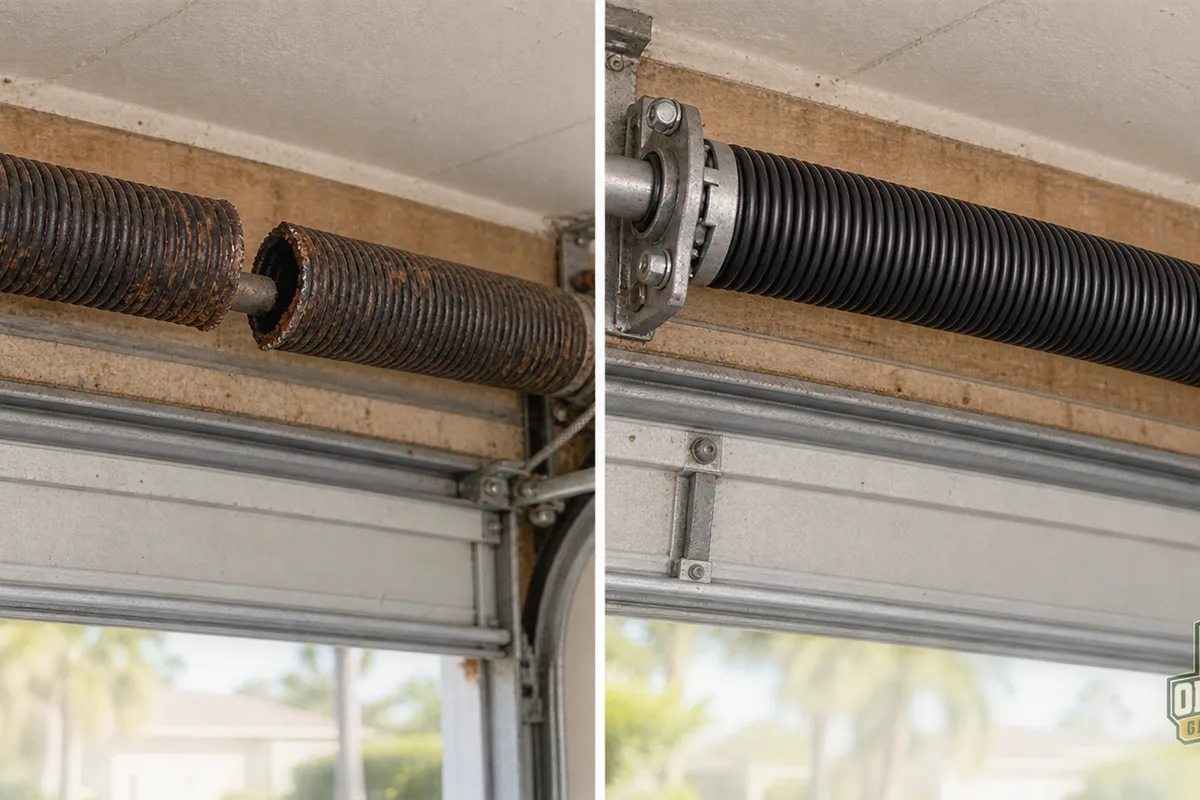
Florida heat, humidity, wind-driven rain, and salt carried inland from the coast can contribute to corrosion on exposed hardware. Regular use also causes metal fatigue through repeated cycles. An inspection should therefore consider the entire counterbalance assembly, including the shaft, drums, cables, center bearing, end bearing plates, spring anchor points, and brackets.
Recognize spring failure
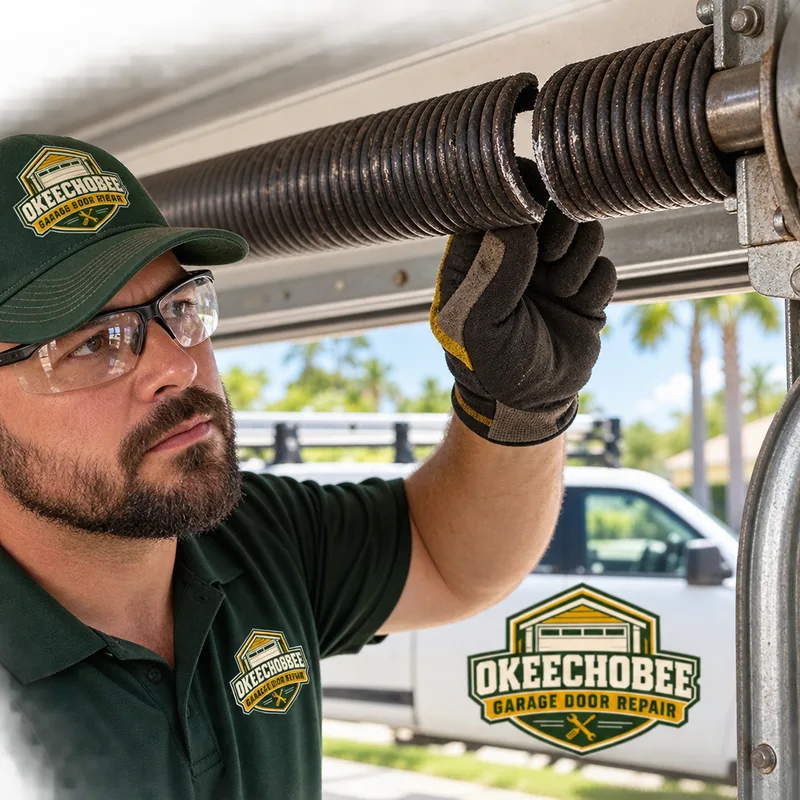
A loud bang from the garage often means a torsion spring has snapped and released stored energy. Another clear sign is a visible gap in a spring mounted on the shaft over the door. Extension springs, which run beside the horizontal tracks on some systems, may appear stretched, separated, or uneven.
Other symptoms can be less obvious. The door may rise several inches and stop, feel unusually heavy when released from the opener, close with uncontrolled movement, or sit crooked because one lift cable has lost tension. An opener that hums without raising the door may be reacting to an unbalanced door rather than an opener failure.
Stop operating the system if a cable is off a drum, the door is jammed at an angle, or a spring is visibly broken. Continued use can bend tracks, damage door sections, or overload the opener. If the problem extends beyond the spring assembly, garage door repair in Okeechobee can address the broader operating issue.
Complete spring-system service
The inspection determines whether the door uses torsion springs, extension springs, or another counterbalance setup. The spring type affects the parts and service procedure.
Replacement depends on the door's weight, height, track configuration, wire size, inside diameter, wind direction, and spring length. Color alone is not enough to select every spring.
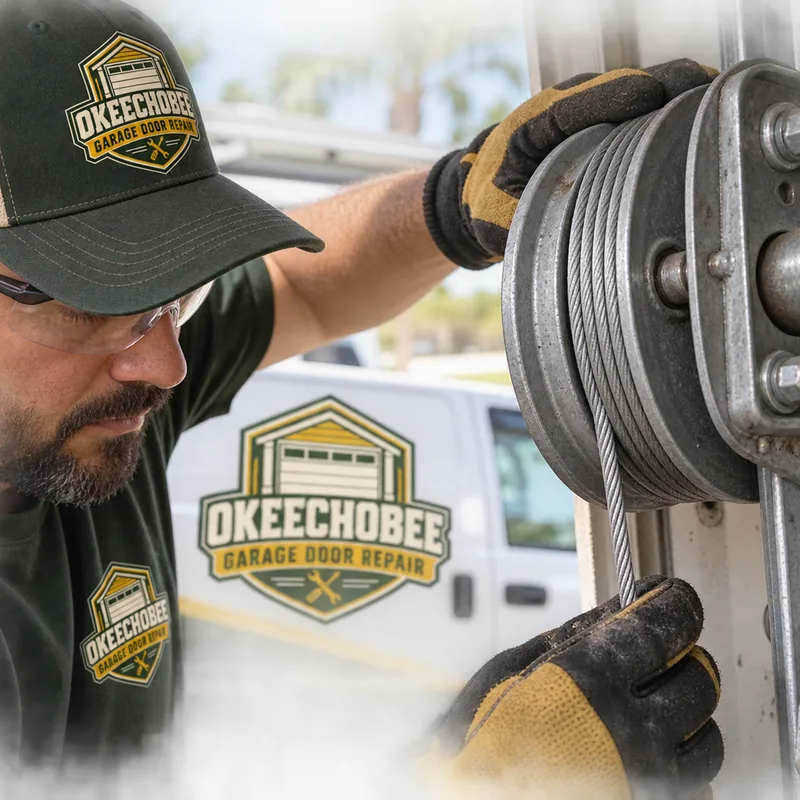
Lift cables should sit correctly in the drum grooves and show no fraying, corrosion, or kinks. Drums, bearings, brackets, and the torsion shaft also need inspection.
Torsion springs require measured turns and proper anchoring. Extension systems should have suitable safety cables where their design calls for them.
After service, the door is disconnected from the opener and checked at several positions. A balanced door should move smoothly without dropping or rising sharply.
The opener, travel limits, photo eyes, rollers, hinges, tracks, and manual release are checked after the door is mechanically balanced.
Replacement decisions
Replacement is usually needed when a spring is broken, badly corroded, permanently stretched, or unable to maintain the correct tension. Springs are fatigue components. A separated coil cannot be restored with lubrication, welding, or added opener force.
On a two-spring torsion system, replacing both springs may be recommended when they were installed together and have experienced the same service cycles. It comes down to the condition and specs of your system, not a fixed rule.
Weight can change after insulation, reinforcement struts, windows, or replacement sections are added. A spring chosen only by appearance can be too strong or too weak. Accurate measurement and a balance test confirm the repair.
Okeechobee's humid, rainy climate makes hardware condition worth checking during spring replacement. Surface rust does not always mean a component has failed, but deep corrosion, frayed cable strands, loose mounting points, or damaged bearings should be addressed before the door returns to regular use.
From symptoms to final test
The technician checks where the door stopped, whether any cables are loose, and whether the door is stable enough to move safely.
Okeechobee Garage Door Repair checks the spring configuration, door condition, cables, drums, shaft, bearings, tracks, and opener connection before selecting the repair.
The required spring specifications and any related damaged components are identified before work begins. This separates necessary repairs from optional maintenance.
The door is secured, stored tension is controlled, and the replacement spring is installed and adjusted for the specific door.
Manual balance is checked before the opener is used. The final test covers smooth travel, cable tracking, closing behavior, and the opener's safety functions.
Springs, cables, and balance
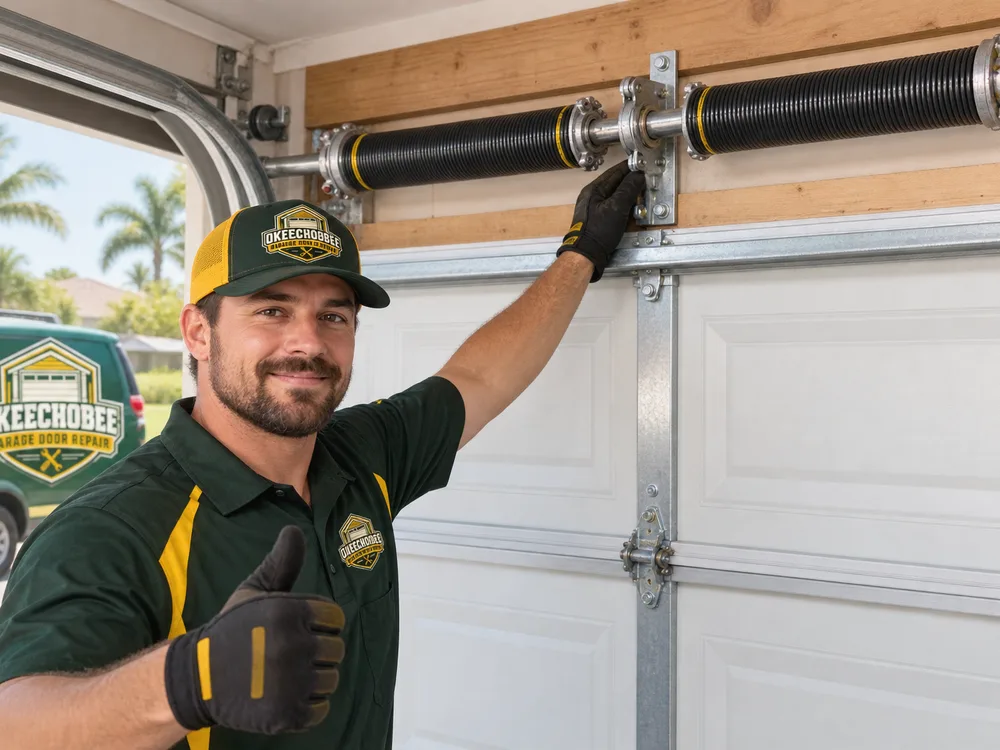
Answers before spring service
You should avoid operating a garage door with a broken spring. The door may be extremely heavy, and attempting to lift it can cause injury, cable displacement, track damage, or opener overload. Keep people and vehicles away from the opening, especially if the door is crooked or partly raised.
A spring with a separated coil needs replacement because the steel component can no longer hold the required tension. Adjustment may help a spring that has lost some tension but remains structurally sound, although its condition and compatibility with the door must be assessed first.
Both springs are often considered for replacement when they were installed together and have completed similar operating cycles. Okeechobee Garage Door Repair evaluates the remaining spring's age, condition, dimensions, and ability to balance the door before recommending whether one or both should be replaced.
A straightforward residential spring replacement can often be completed during one service visit, but the time depends on spring availability, door condition, access, and related cable or bearing damage. A jammed door or damaged mounting hardware requires additional work before final testing.
The opener should not be used to compensate for a failed spring. The spring system carries much of the door's effective weight, while the opener guides a properly balanced door through its travel. Repeated attempts can damage the opener or leave the door stuck.
Useful details include the door's height and width, whether it is a single or double door, the number of springs, the spring's location, and any visible gap or cable damage. Final selection still requires inspection and measurements such as wire size, inside diameter, spring length, and wind direction.
Heat, humidity, and wind-driven rain can contribute to corrosion on springs and nearby hardware in the Okeechobee area. Corrosion can weaken coils and cable strands, so inspection should cover the full counterbalance system rather than the broken component alone.
Tell Okeechobee Garage Door Repair what the door is doing and whether the spring or cables look damaged. A focused inspection can identify the correct replacement and any related hardware that needs attention.